


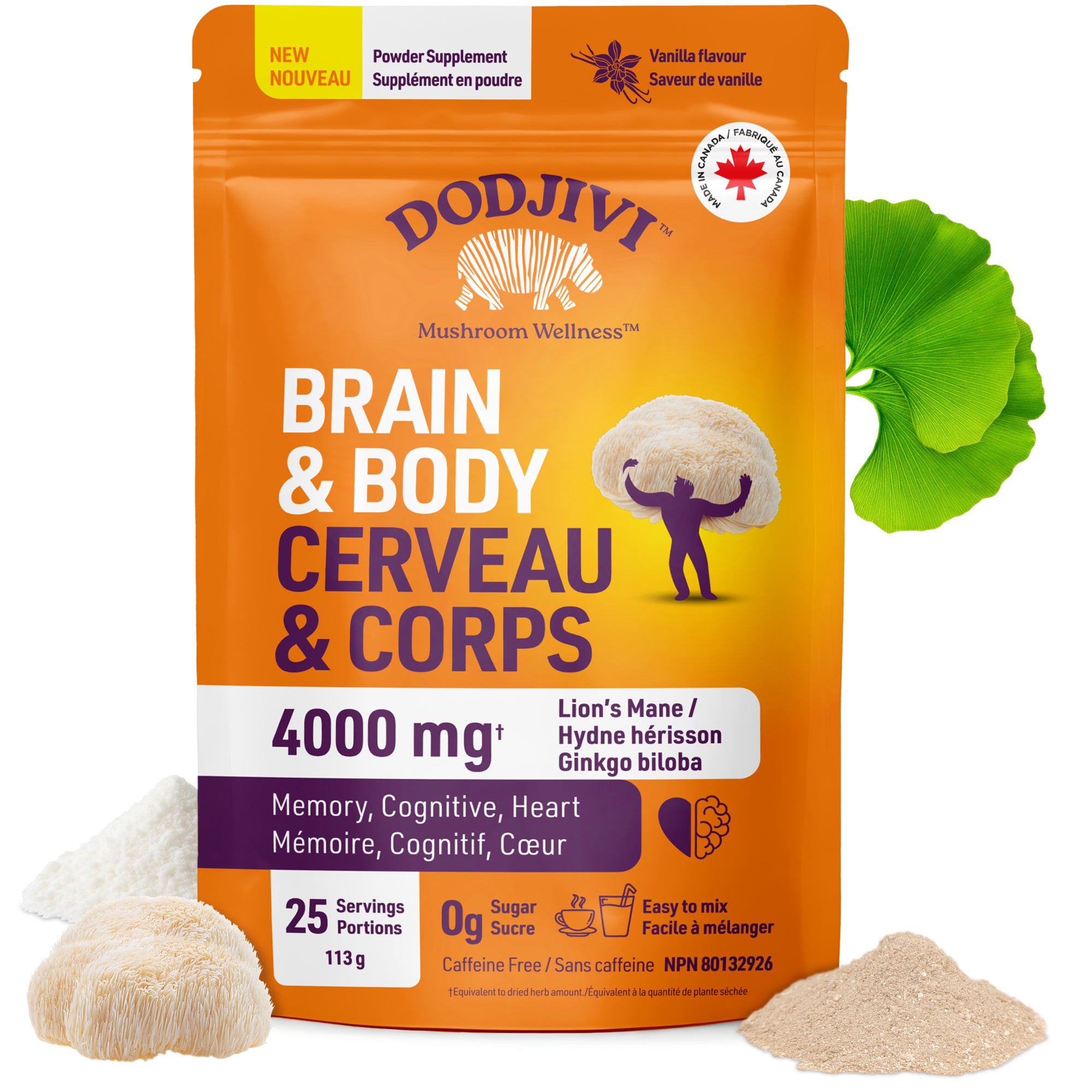
Finding the best mushroom supplement in Canada is not about choosing the package with the longest list of claims. The better choice is the product that tells you exactly what is inside, how much you are taking, and how it is regulated.
This guide explains the label details that matter. It also shows you how to compare mushroom species, extracts, doses, testing, and safety warnings before you buy.
How to Choose the Best Mushroom Supplement in Canada
Start with the label, not the front of the package. A polished design can catch your eye, but it cannot tell you whether a supplement fits your needs.
In Canada, many mushroom supplements are sold as natural health products. Under the Health Canada natural health product rules, licensed products must meet requirements for safety, quality, evidence, labelling, and manufacturing.
Use the following checks before comparing prices.
1. Look for an NPN
An NPN is an eight-digit Natural Product Number. Health Canada gives this number to a natural health product after reviewing its licence application.
You can search the number in the Licensed Natural Health Products Database. This lets you confirm the product name, licensed ingredients, recommended use, dose, and warnings.
An NPN does not mean a supplement will produce the same result for every person. It does show that the product has passed through Canada's licensing system.
2. Check the Exact Mushroom Species
The label should name the mushroom, not just say "mushroom complex."
Common functional mushrooms include:
- Lion's Mane, listed as Hericium erinaceus
- Reishi, listed as Ganoderma lucidum
- Chaga, listed as Inonotus obliquus
- Turkey Tail, listed as Trametes versicolor
- Cordyceps species or cultured Cordyceps ingredients
The scientific name helps you confirm what you are buying. It also makes it easier to compare the product with its licensed information.
3. Compare the Amount Per Serving
Do not compare products by package weight alone. Check the amount of each active ingredient in one serving.
A larger pouch may contain a smaller amount per serving. A smaller pouch may use a concentrated extract. The label should also tell you how many servings are in the package.
Watch for terms such as "equivalent dried mushroom." For example, a concentrated extract may state both the extract amount and the equivalent amount of dried mushroom. Those numbers are not the same measurement.
4. Understand Extract Ratios
An extract ratio such as 4:1 means the manufacturer used a larger starting amount of material to make a smaller amount of extract. It does not mean the final product is four times better.
The ratio is useful only when you also know:
- Which mushroom was used
- Which part was used
- The amount in each serving
- The extraction method
- Whether the final product was tested
A high ratio without clear supporting details is not enough to judge quality.
5. What Does Dual Extraction Mean?
Dual extraction usually means the manufacturer used water and alcohol during processing. These liquids can remove different groups of mushroom compounds.
However, "dual extracted" is a process description. It is not proof that the product works better for every purpose. Ask what the finished extract contains and whether the company provides clear testing or standardization details.
For some shoppers, a simple hot-water extract with a clear dose and licence may be more useful than a poorly explained dual extract.
6. Check Whether the Label Names the Mushroom Part
Some products use the fruiting body. Others use mycelium, which is the root-like network that grows through a food source. Some use both.
Neither word should be treated as an automatic guarantee. The important question is whether the company clearly states what it uses and provides useful finished-product information.
If a product lists beta-glucans, look for a measured amount or percentage and a clear test method. Do not treat a vague "polysaccharide" claim as the same thing.
7. Look for Testing and Manufacturing Details
Health Canada requires licensed natural health products to follow manufacturing and quality rules. A responsible brand should still make it easy to understand how it checks its product.
Useful quality details include:
- Identity testing
- Microbial testing
- Heavy metal testing
- Batch or lot information
- Clear storage directions
- A Canadian licence number
- A complete ingredient and allergen statement
The NIH guide to dietary supplement safety also recommends checking the full label and discussing supplements with a health professional when you use medicines or have a health condition.
8. Review Every Ingredient, Not Just the Mushroom
Many products combine mushrooms with vitamins, minerals, herbs, caffeine, or plant extracts. Those added ingredients can change how the product fits your routine.
For example, a brain supplement may combine Lion's Mane with Ginkgo, magnesium, or vitamin B3. A mushroom coffee may contain caffeine and other botanicals. Read the full ingredient list and warnings before deciding.
This matters even more if you:
- Take prescription medicine
- Are pregnant or breastfeeding
- Have allergies
- Have a health condition
- Are preparing for surgery
- Already use other supplements
9. Compare the Real Cost Per Serving
Divide the package price by the number of servings. Then compare the dose and ingredients in each serving.
A cheaper package is not always a better value. A more expensive product is not automatically better either. The useful comparison is the cost of the labelled daily serving that you plan to use.
Also check whether the product requires several capsules, multiple scoops, or more than one serving each day.
A Simple Mushroom Supplement Checklist
Before buying, confirm these points:
- The product has an NPN when sold as a natural health product.
- The exact mushroom species is listed.
- The amount per serving is clear.
- The extract ratio is explained.
- The mushroom part is identified.
- Testing and manufacturing information is available.
- Added ingredients and caffeine are easy to find.
- The warnings fit your medicines and health needs.
- The cost per serving makes sense.
- The directions are practical for your routine.
Conclusion
The best mushroom supplement in Canada is the one you can evaluate clearly. Look for an NPN, named mushroom species, a useful serving amount, transparent extract details, complete warnings, and quality information.
Avoid choosing a product based only on a high milligram number or a fashionable extraction term. A clear, licensed, well-labelled formula is easier to compare and safer to add to your routine.
Related Reading
- fruiting body and mycelium
- mushroom supplement safety
- mushroom coffee benefits
- Brain and Body supplement
Sources and Backlinks
-
Health Canada natural health product rules
https://www.canada.ca/en/health-canada/services/drugs-health-products/natural-non-prescription/regulation.html
Canada's official natural health product regulatory overview. -
Licensed Natural Health Products Database
https://health-products.canada.ca/lnhpd-bdpsnh/index-eng.jsp
Official database for licensed Canadian natural health products. -
NIH guide to dietary supplement safety
https://ods.od.nih.gov/factsheets/WYNTK-Consumer/
Federal consumer guidance on supplement labels and safety. -
Dodjivi Brain and Body product information
https://www.dodjivi.com/products/brain-body-supplement
Current product label, ingredients, NPN, and warnings.


