


Mushroom coffee and green tea can both replace a regular cup of coffee, but they are very different drinks. One keeps the taste and routine of coffee. The other offers a lighter tea flavour and often less caffeine.
This mushroom coffee vs green tea comparison covers caffeine, taste, ingredients, preparation, and daily use. It will help you choose the drink that fits your routine.
Mushroom Coffee vs Green Tea at a Glance
| Feature | Mushroom coffee | Green tea |
|---|---|---|
| Base drink | Coffee blended with mushroom ingredients | Leaves of the Camellia sinensis plant |
| Typical taste | Coffee-forward with earthy or herbal notes | Light, grassy, vegetal, or slightly bitter |
| Caffeine | Varies by product and serving | Usually lower than coffee, but varies by tea |
| Preparation | Instant mix or brewed coffee product | Tea leaves or a tea bag steeped in water |
| Added ingredients | May contain mushrooms, herbs, or botanicals | Usually tea leaves, unless flavoured or blended |
| Best for | People who want a coffee-style drink | People who prefer a lighter tea routine |
What Is Mushroom Coffee?
Mushroom coffee combines coffee with one or more functional mushroom ingredients. Common examples include Reishi, Lion's Mane, Chaga, and Turkey Tail.
The caffeine amount depends on the formula. Some products use less coffee than a regular brewed cup. Others add ingredients such as green tea, guarana, ginseng, or cocoa, which can change the final caffeine or flavour.
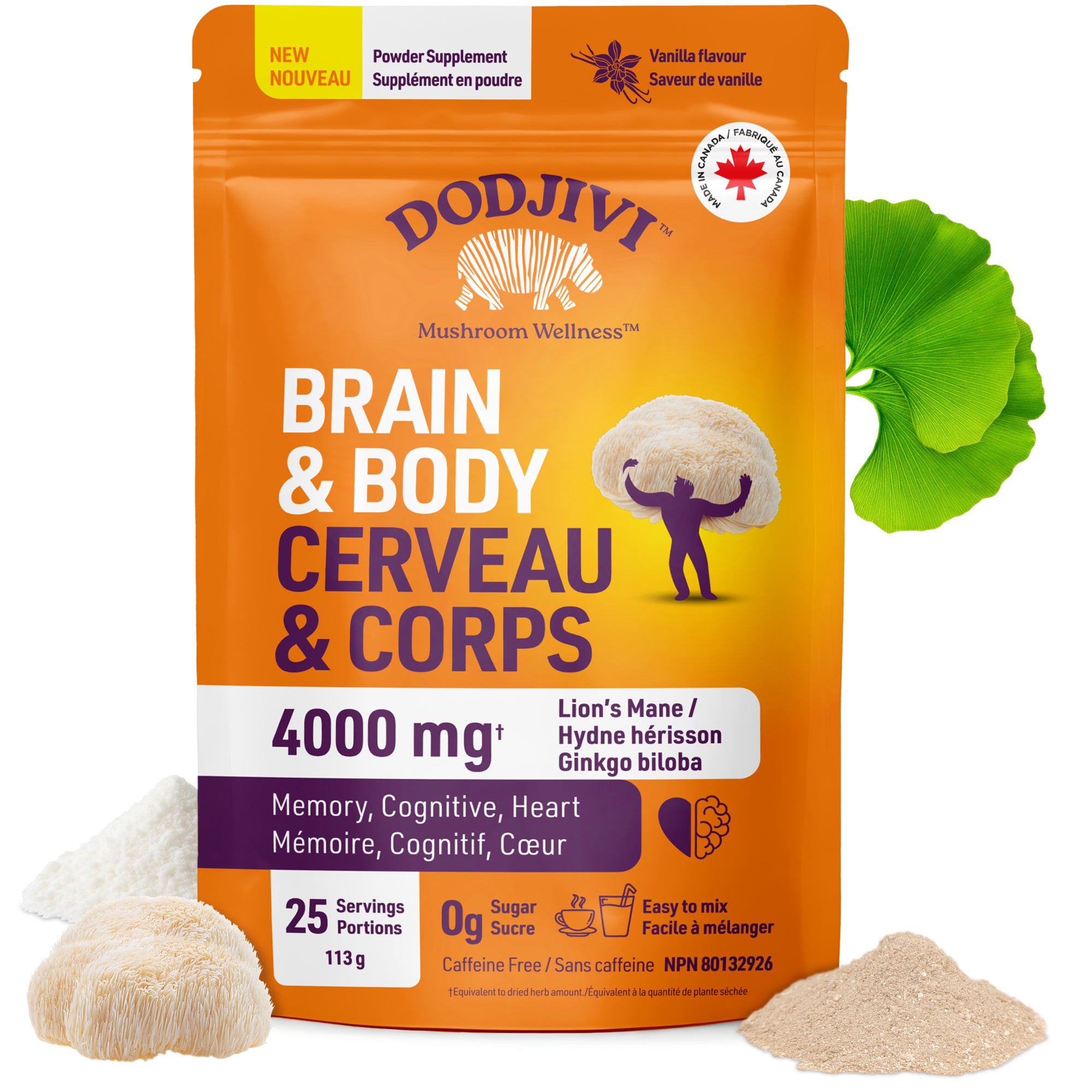
Always use the current label as your source of truth. For example, Dodjivi's current Vitality listing states 64 mg of caffeine per serving. Another mushroom coffee can contain a different amount.
What Is Green Tea?
Green tea comes from the Camellia sinensis plant. The leaves are processed with limited oxidation, which helps create its lighter colour and fresh taste.
Green tea contains caffeine. According to the MedlinePlus caffeine guide, an eight-ounce cup of tea can contain about 14 to 60 mg. The exact amount changes with the tea type, amount of leaf, water temperature, and steeping time.
Decaffeinated green tea still may contain a small amount of caffeine. Check the package if caffeine matters to you.
Which Drink Has More Caffeine?
There is no single winner because both drinks vary.
Green tea often contains less caffeine than regular brewed coffee. Mushroom coffee can fall between tea and regular coffee, but some formulas may be higher or lower.
The FDA caffeine guidance states that 400 mg per day is an amount not generally associated with negative effects for most adults. Personal sensitivity can still vary.
When comparing drinks, add up caffeine from every source, including coffee, tea, energy drinks, chocolate, supplements, and some medicines.
How Do They Taste?
Mushroom coffee usually tastes like coffee first. The mushroom and botanical ingredients may add earthy, bitter, or herbal notes. Milk, oat beverage, cinnamon, vanilla, or cocoa can soften the flavour.
Green tea is lighter. It can taste grassy, vegetal, fresh, or slightly bitter. Water that is too hot or a long steep can make it more bitter.
Choose mushroom coffee if you want a darker, roasted drink. Choose green tea if you prefer a lighter and cleaner cup.
Which One Is Easier to Prepare?
Both can be simple.
Instant mushroom coffee usually requires hot water and stirring. Some formulas can also be mixed into cold drinks, smoothies, or oatmeal.
Green tea requires a tea bag or loose leaves, hot water, and a short steep. It may take more attention because water temperature and steeping time affect the taste.
What About the Mushroom Ingredients?
The mushroom name on the front of a package is only the first detail to check. Look at the full label for:
- The exact mushroom species
- The amount per serving
- Whether it is powder or extract
- Other herbs and botanicals
- Caffeine per serving
- Warnings and allergens
Do not assume every mushroom coffee has the same formula. A Reishi-led coffee is different from a blend with Lion's Mane, Chaga, and Turkey Tail.
Is Green Tea Better for a Low-Caffeine Routine?
Green tea may be easier to fit into a low-caffeine routine, but the label still matters. Some green teas are stronger than others. Large servings and long steeping times can also raise the caffeine amount.
If your main goal is to reduce caffeine, compare exact serving sizes. Decaffeinated tea or a caffeine-free herbal drink may be more suitable than either option.
Is Mushroom Coffee Better for Coffee Drinkers?
Mushroom coffee may be the easier change if you enjoy the taste, aroma, and routine of coffee. You can prepare it like a simple coffee drink and add the same milk or flavourings you already use.
However, it should not be treated as a medical product. Choose it for its ingredients, taste, caffeine level, and convenience, not as a replacement for medical care.
Who Should Be Careful?
Check the full label before using either drink. Speak with a qualified health professional if you are pregnant or breastfeeding, take prescription medicine, have a health condition, have a mushroom allergy, or are preparing for surgery.
People who are sensitive to caffeine may prefer a smaller serving or an earlier time of day.
Actionable Takeaways
- Compare caffeine per serving, not just the drink name.
- Choose mushroom coffee for a coffee-style taste and routine.
- Choose green tea for a lighter flavour and often less caffeine.
- Read every added ingredient in a mushroom coffee formula.
- Start with one labelled serving and watch how you feel.
- Avoid late-day caffeine if it affects your sleep.
Conclusion
The best choice in the mushroom coffee vs green tea debate depends on your taste and caffeine goals. Mushroom coffee gives you a more familiar coffee experience. Green tea offers a lighter drink that often contains less caffeine.
Read the label, compare equal serving sizes, and choose the drink you will enjoy consistently.
Related Reading
- mushroom coffee caffeine guide
- mushroom coffee vs matcha
- mushroom coffee vs regular coffee
- Dodjivi Vitality mushroom coffee
Sources and Backlinks
-
MedlinePlus caffeine guide
https://medlineplus.gov/caffeine.html
NIH consumer guide with beverage caffeine ranges. -
FDA caffeine guidance
https://www.fda.gov/consumers/consumer-updates/spilling-beans-how-much-caffeine-too-much
Federal guidance on caffeine amounts and sensitivity. -
Dodjivi Vitality product information
https://www.dodjivi.com/products/functional-instant-mushroom-coffee-mix-reishi-ginseng
Current ingredients, preparation, and caffeine per serving.


