
What Is Mushroom Coffee? (And How It’s Different From Regular Coffee)
If you love coffee but don’t always love the after (jitters, a mid-morning crash, or that “my stomach is not pleased” feeling), you’ve probably seen mushroom coffee pop up in your feeds or on shelves at local wellness events.
And if your first thought was: “Wait… coffee with mushrooms? Does it taste like soup?”
You’re not alone.
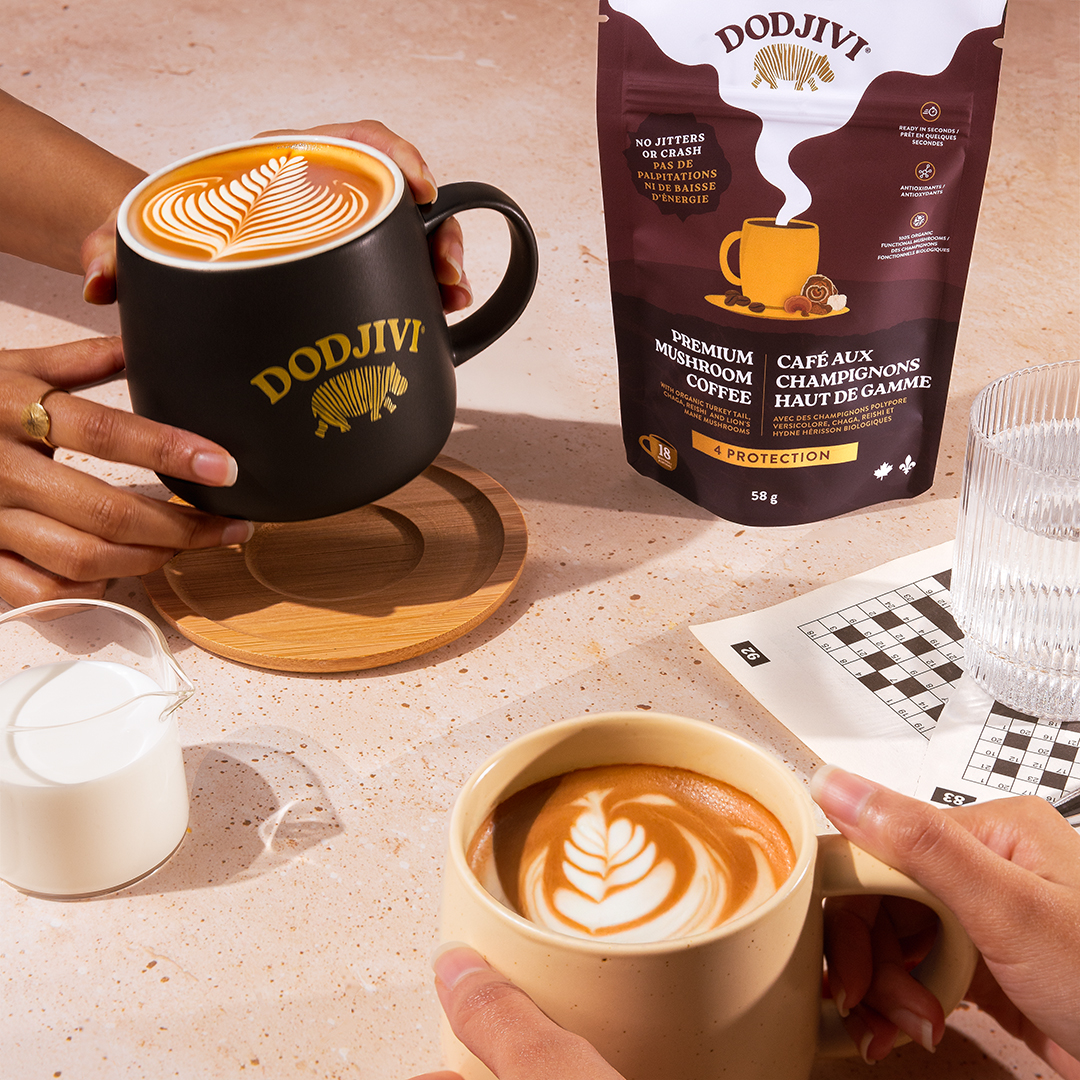
Here’s the simple truth: mushroom coffee is usually regular coffee blended with functional mushroom extracts, not button mushrooms, and not psychedelic mushrooms. Most blends are designed to taste like coffee (because… it should), while adding mushroom compounds people use as part of a general wellness routine.
This guide breaks down what mushroom coffee is, how it’s made, how it differs from your normal brew, and how to make it taste amazing at home (including an iced latte recipe that actually hits).
What Exactly Is Mushroom Coffee?
Mushroom coffee is typically a blend of:
- Coffee (instant, ground, or brewed coffee base), plus
- Functional mushroom extracts (often Lion’s Mane, Reishi, Chaga, Cordyceps, Turkey Tail)
Most brands use extracts rather than just dried mushroom powder because extraction concentrates certain compounds and improves mixability in drinks.
Important
It’s not “mushroom-flavoured” coffee
When it’s formulated well, mushroom coffee tastes like… coffee. Earthy notes can show up (especially with certain mushrooms), but it shouldn’t taste like mushrooms from a frying pan.
Dodjivi’s positioning “flavour first + functional mushrooms” is exactly the point: the function should fit into your routine without sacrificing your favourite part of coffee: taste.
How Is Mushroom Coffee Made?
Most instant mushroom coffees follow a process like this:
- Mushrooms are grown and harvested (fruiting body or mycelium, depending on the brand)
- Compounds are extracted (commonly hot-water extraction; sometimes dual extraction)
- The extract is dried into a powder
- It’s blended with coffee (instant coffee, microground coffee, or a mix)
Why This Matters
Extraction often improves consistency in flavour and texture and can reduce the “gritty” experience some people hate.
Mushroom Coffee vs Regular Coffee: The Real Differences
Let’s compare the things people actually care about day-to-day: caffeine feel, taste, acidity, and routine.
Quick Comparison Table
Feature | Regular Coffee | Mushroom Coffee |
Base | 100% coffee | Coffee + functional mushroom extracts |
Caffeine | Usually higher | Often lower if it’s a coffee/mushroom blend |
“Jitters” potential | Higher for caffeine-sensitive folks | Potentially gentler due to lower caffeine (varies by brand) |
Taste | Familiar coffee profile | Should still taste like coffee; may be slightly earthier |
Acidity | Coffee is naturally acidic (pH commonly ~4.85–5.10) | May feel gentler for some people (often less coffee per serving; depends on blend) |
Routine | Brew + drink | Often quick-mix instant, easy lattes, travel-friendly |
A Key Point
Not all mushroom coffees are equal. Some are half coffee / half mushroom extract; others are mostly coffee with a small “functional add.” That ratio influences caffeine, flavour, and how noticeable the change feels.
Does Mushroom Coffee Have Less Caffeine?
Often, yes, because mushrooms contain no caffeine, and blends may replace part of the coffee with mushroom extract. One common explanation is that a 50/50 style blend can land around “about half” the caffeine of regular coffee, though brands vary.
If you’re caffeine-sensitive, that can be a big deal. Lower caffeine can mean:
- Less “wired” feeling
- Fewer jitters
- A gentler afternoon
But it’s not automatic. Some blends are nearly full-caffeine. Best practice check the label (or choose a brand that’s transparent about serving composition).
Is Mushroom Coffee “Low Acid”?
Here’s the honest answer: coffee itself is naturally acidic, with studies reporting brewed coffee pH commonly in the ~4.85 to 5.10 range.
Mushroom coffee may feel gentler for some people because:
- The blend may contain less coffee per serving
- Some people do better with instant-style coffee bases
- The added ingredients can change perceived harshness
But “low acid” depends on the specific product and how your body reacts. If you’re dealing with reflux or a sensitive stomach, you can also try cold brew, darker roasts, or pairing coffee with food (simple changes that help many people).
What Functional Mushrooms Are Common (And Why People Use Them)?
Let’s keep this credible and non-salesy: research on mushrooms is active, but mushroom coffee isn’t a magic potion, and results in humans can be mixed.
That said, here are the usual suspects you’ll see in functional coffee blends:
Lion’s Mane (Hericium Erinaceus)
Often used as part of a focus routine. Some small human studies suggest potential effects on certain cognitive tasks or stress measures, but findings can be mixed, and more research is needed.
Reishi (Ganoderma Lucidum)
Traditionally used in wellness routines connected to balance and stress support. Human evidence varies by population and product, and it’s not something to treat as a guaranteed effect.
Chaga (Inonotus Obliquus)
Known for its bioactive compounds (including polyphenols and polysaccharides) and studied heavily in the lab and review literature for antioxidant-related properties. Human outcomes depend on context, dose, and preparation.
Cordyceps (Cordyceps Militaris / Related Species)
Often associated with energy routines. Some research explores exercise performance and endurance markers, but results and relevance vary.
Turkey Tail (Trametes Versicolor)
Studied for its polysaccharide components (like beta-glucans) and broader wellness interest. A lot of research is still context-specific, so it’s best framed as general “support,” not promises.
What Does Mushroom Coffee Taste Like?
Most people want one answer:
It should taste like coffee.
A good blend is typically:
- Smooth
- Slightly earthy (not “fungal”)
- Less sharp or bitter (depending on the base coffee)
If you try mushroom coffee and it tastes aggressively mushroomy, that’s usually a formulation issue (or you might be tasting an under-sweetened, under-creamed cup).
How to Make Mushroom Coffee Taste Really Good
If you’re new to mushroom coffee, start like this:
1. Choose Your “Style.”
- Black/americano style mix with hot water; add a splash of milk if needed
- Latte-style milk makes mushroom coffee shine (especially oat milk)
- Iced cold + creamy reduces earthy notes instantly
2. Add One “Rounding” Ingredient
This is the difference between “fine” and “I actually look forward to this.”
- Cinnamon
- Vanilla
- Maple syrup (very Canadian, very effective)
- Cocoa
- A pinch of salt (yes tiny pinch)
3. Use Oat Milk For The Easiest Café Flavour
Oat milk + mushroom coffee is a reliable pairing for a creamy, premium feel.

Recipe: Iced Mushroom Coffee Oat Latte (2 Minutes)
Ingredients
- 1 serving instant mushroom coffee blend
- 60–90 ml hot water (just enough to dissolve)
- 150–200 ml oat milk
- Ice
- 1–2 tsp maple syrup (optional)
- Dash of cinnamon or vanilla (optional)
Steps
- Dissolve the mushroom coffee in a small amount of hot water.
- Fill a glass with ice.
- Pour in oat milk.
- Add the coffee concentrate and stir.
- Taste and adjust: maple syrup + cinnamon = instant “coffee shop” vibes.
Make It A Mocha
Add 1 tsp cocoa + maple syrup.

If you want it lightly sweet (not sugary), try:
- Maple syrup (a small amount goes far)
- Honey
- Vanilla extract (adds perceived sweetness)
- Cinnamon (same trick)
- Unsweetened cocoa + a touch of sweetener
Tip
If it tastes “mushroomy,” it’s often not the mushrooms; it’s that the cup needs a bit more body (milk) or a touch of sweetness.
How to Choose the Best Mushroom Coffee in Canada
If you’re searching “best mushroom coffee Canada” or “mushroom coffee online Canada”, here’s what to look for (without getting lost in supplement-speak):
1. Flavour Comes First
You will not stick with it if it tastes like compromise.
2. Clear Mushroom List + Form
Ideally, which mushrooms, and whether they use extracts.
3. Caffeine Transparency (Or At Least Ratio Clarity)
If you want “without jitters,” you want to know what you’re getting.
4. Third-Party Testing/Quality Standards
Especially important when you’re buying wellness products online.
5. A Routine You’ll Actually Do
Instant mix, travel sachets, or an easy latte workflow > complicated rituals.
Soft product bridge (not salesy). If you want a Canadian-made, flavour-forward option designed for daily use, explore Dodjivi at www.dodjivi.com.
FAQs: What People Google About Mushroom Coffee
Does Mushroom Coffee Taste Like Mushrooms?
Usually no. Most blends are designed to taste like coffee, sometimes with a mild earthy note.
Is Mushroom Coffee Good For Focus?
Some mushrooms (like Lion’s Mane) are being studied for cognitive and mood-related outcomes, but results can be mixed and depend on the individual and product. Think “general support,” not guaranteed results.
Does Mushroom Coffee Give You Energy?
It can mainly come from caffeine if coffee is included, and possibly from the ritual + lower-jitter experience for some people. Evidence for performance-related effects of certain mushrooms exists, but it varies.
Is Mushroom Coffee Really “Without Jitters”?
It may be gentler if it has less caffeine than regular coffee, but it depends on the blend and your sensitivity.
Can I Drink Mushroom Coffee Every Day?
Many people do, but it’s smart to treat it like any wellness product, such as starting with a small amount, paying attention to how you feel, and checking with a healthcare professional if you’re pregnant, have a condition, or take medications (some mushrooms can interact with certain people).
Make Your Morning Coffee Do A Bit More
Mushroom coffee isn’t about replacing everything you love about coffee. It’s about keeping the ritual and the flavour while choosing a blend that feels gentler, more balanced, and easier to incorporate into a daily routine.
If you’re curious, start simple: try it as an iced oat latte, lightly sweetened with maple syrup, and see how it fits your morning.
Ready to explore flavour-forward functional blends made for Canadian routines? Visit www.dodjivi.com to shop, subscribe & save, or find your favourite blend online.